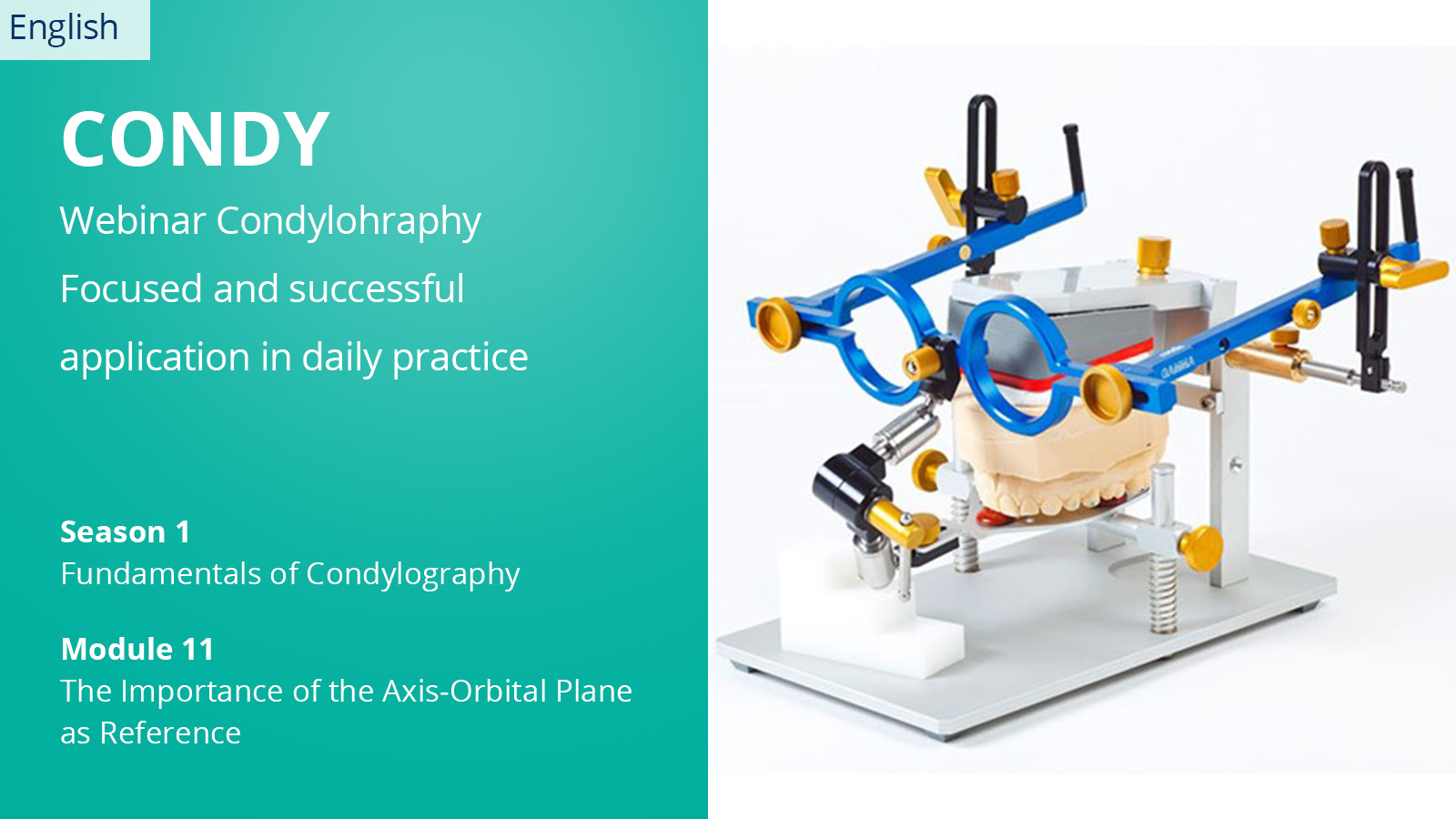
This module explores the importance of the axis-orbital plane and provides a historical overview of gnathology. Learn the difference between the principles of pantography and axis mapping.

This module explores the importance of the axis-orbital plane and provides a historical overview of gnathology. Learn the difference between the principles of pantography and axis mapping.
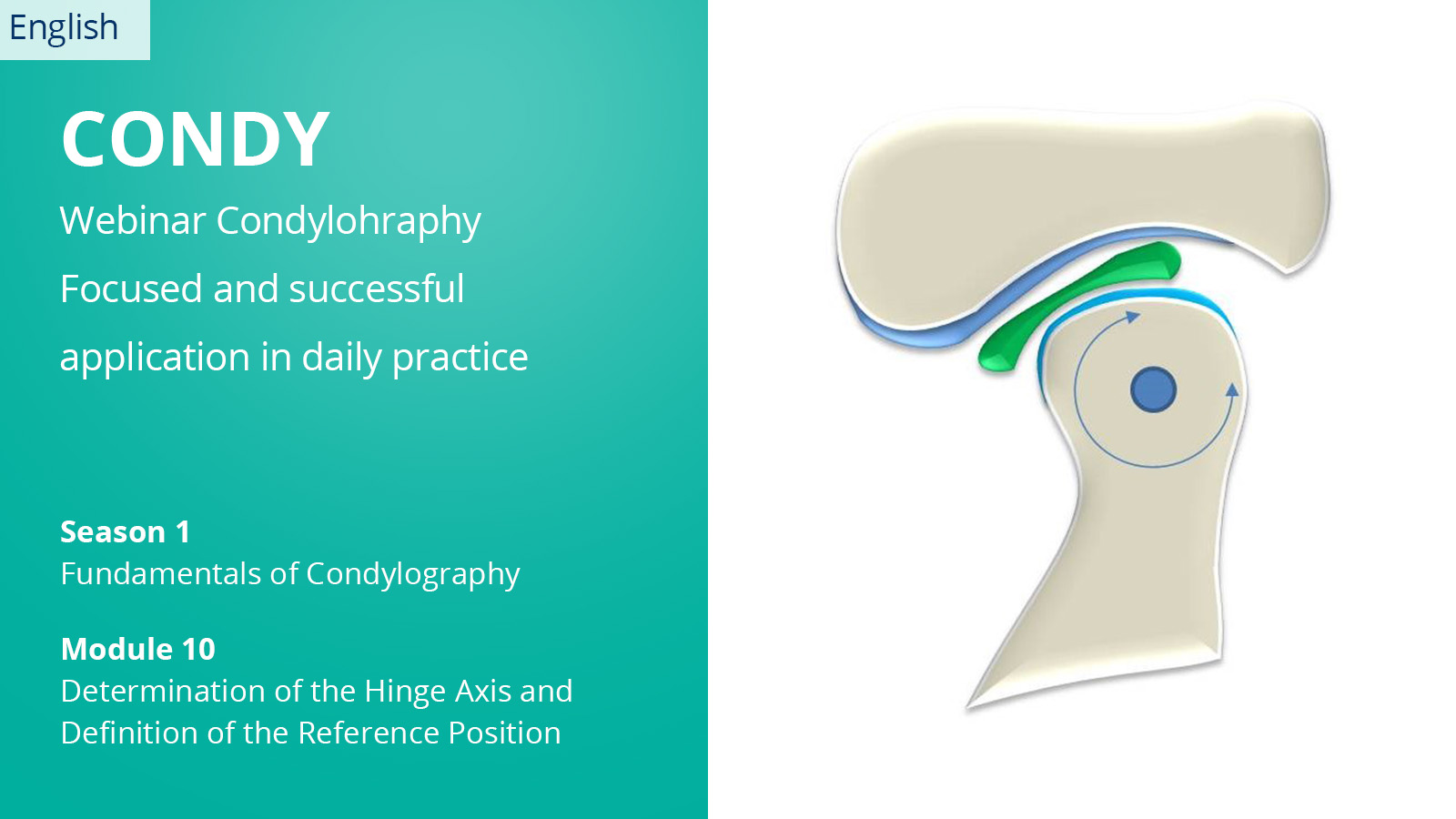
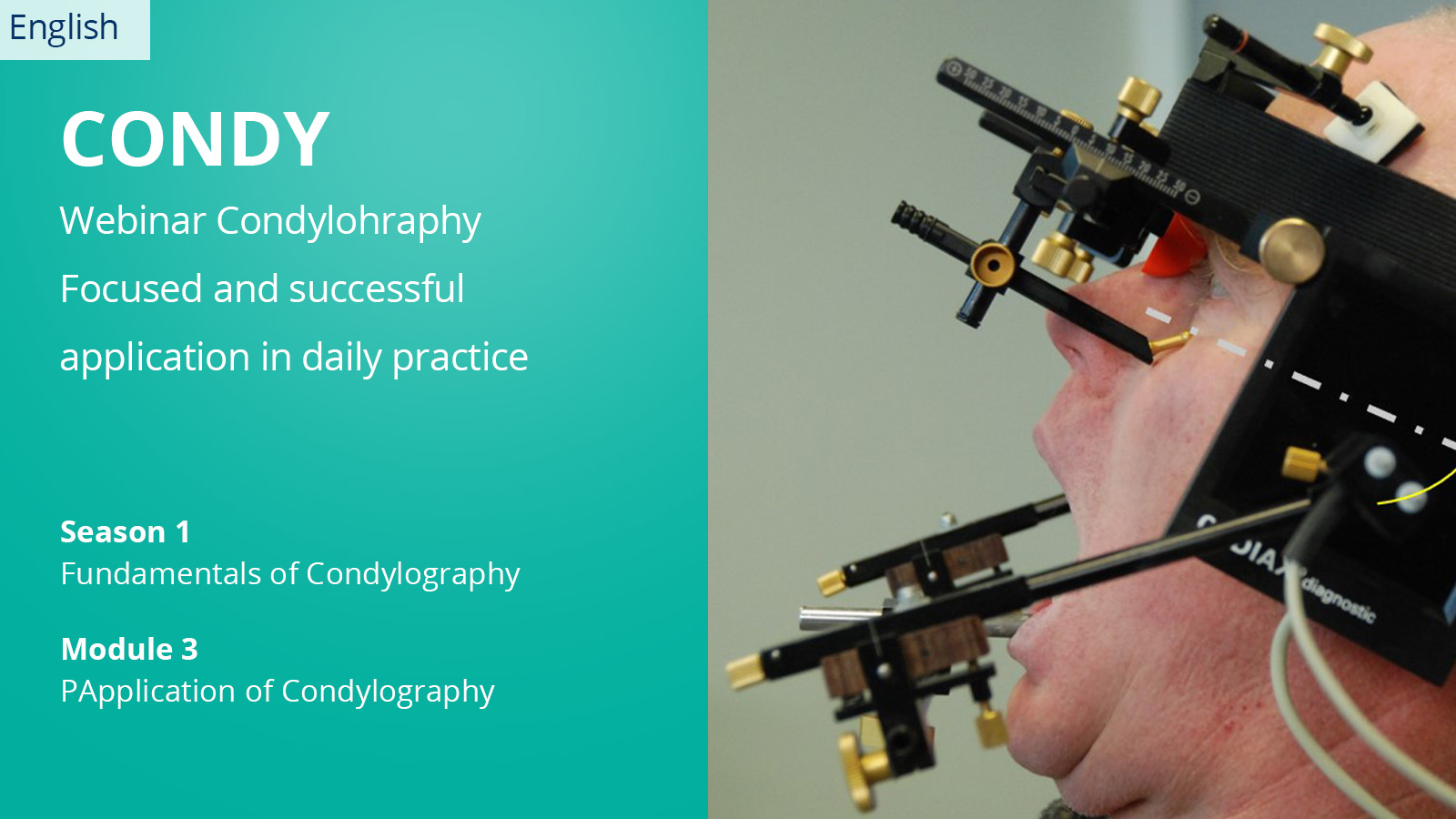
In this module you will learn more about the standard protocols used in recording, how you can identify errors during the recording and why the precision of the recording is such an essential requirement for later analysis.
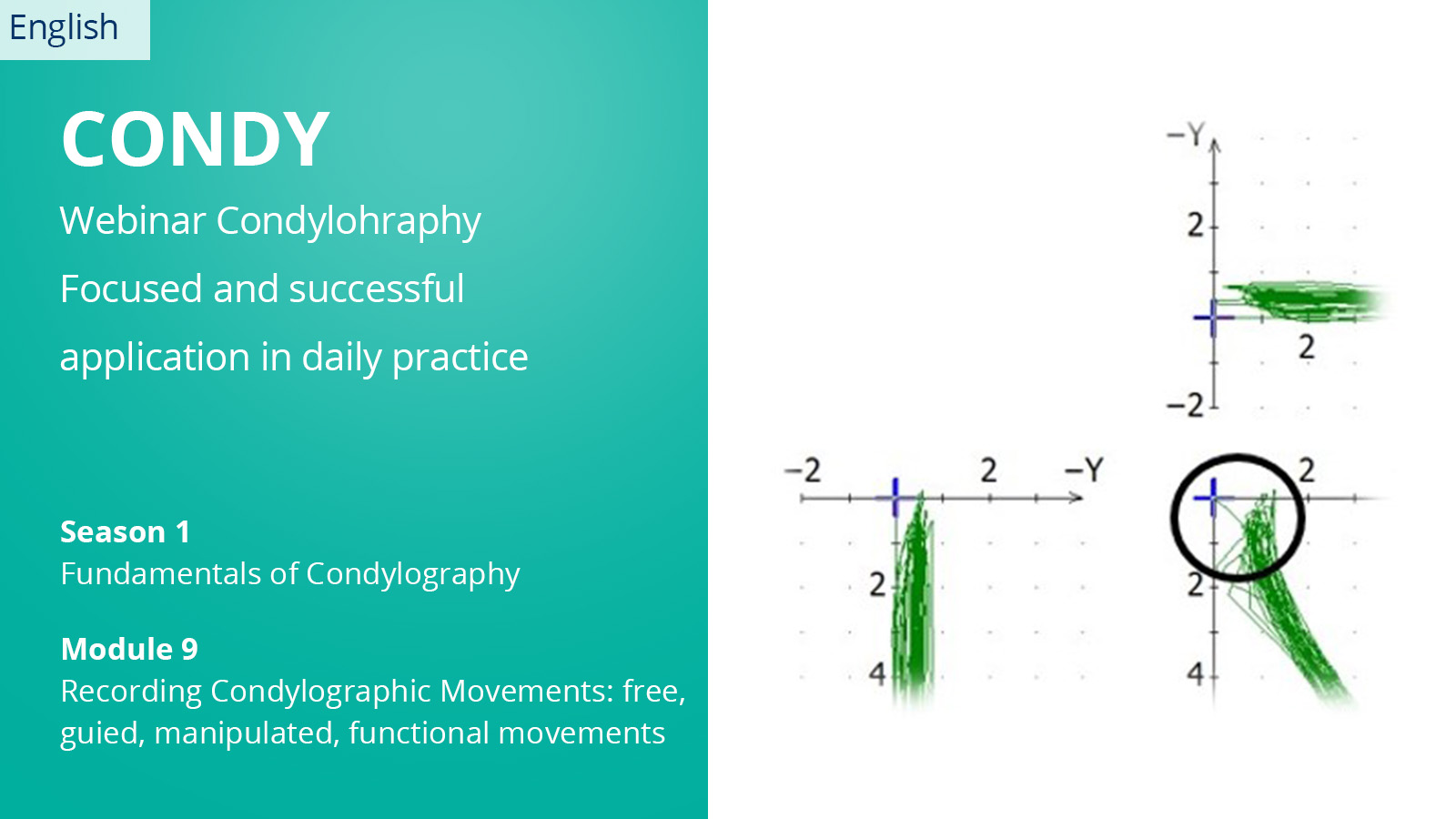
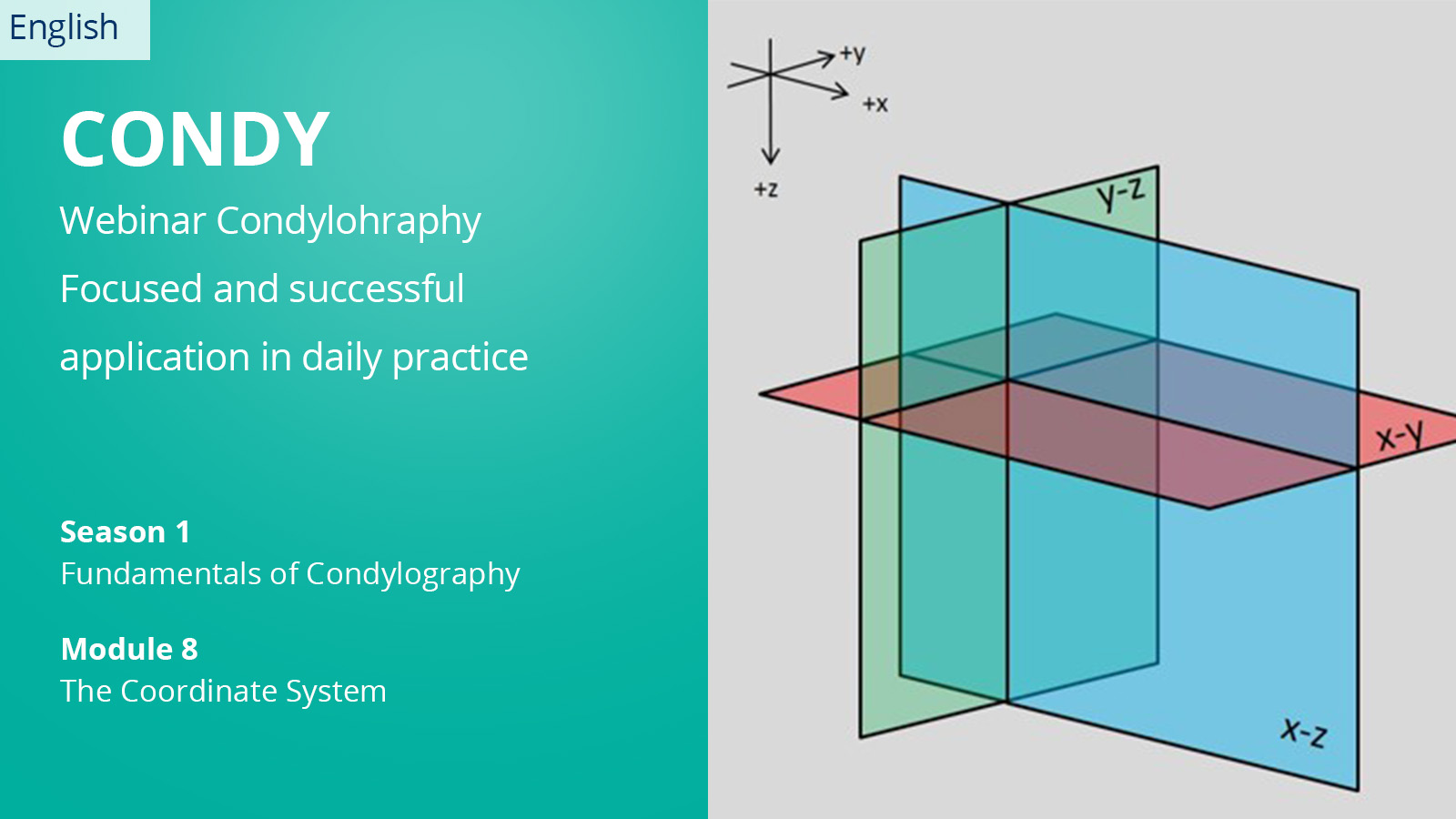
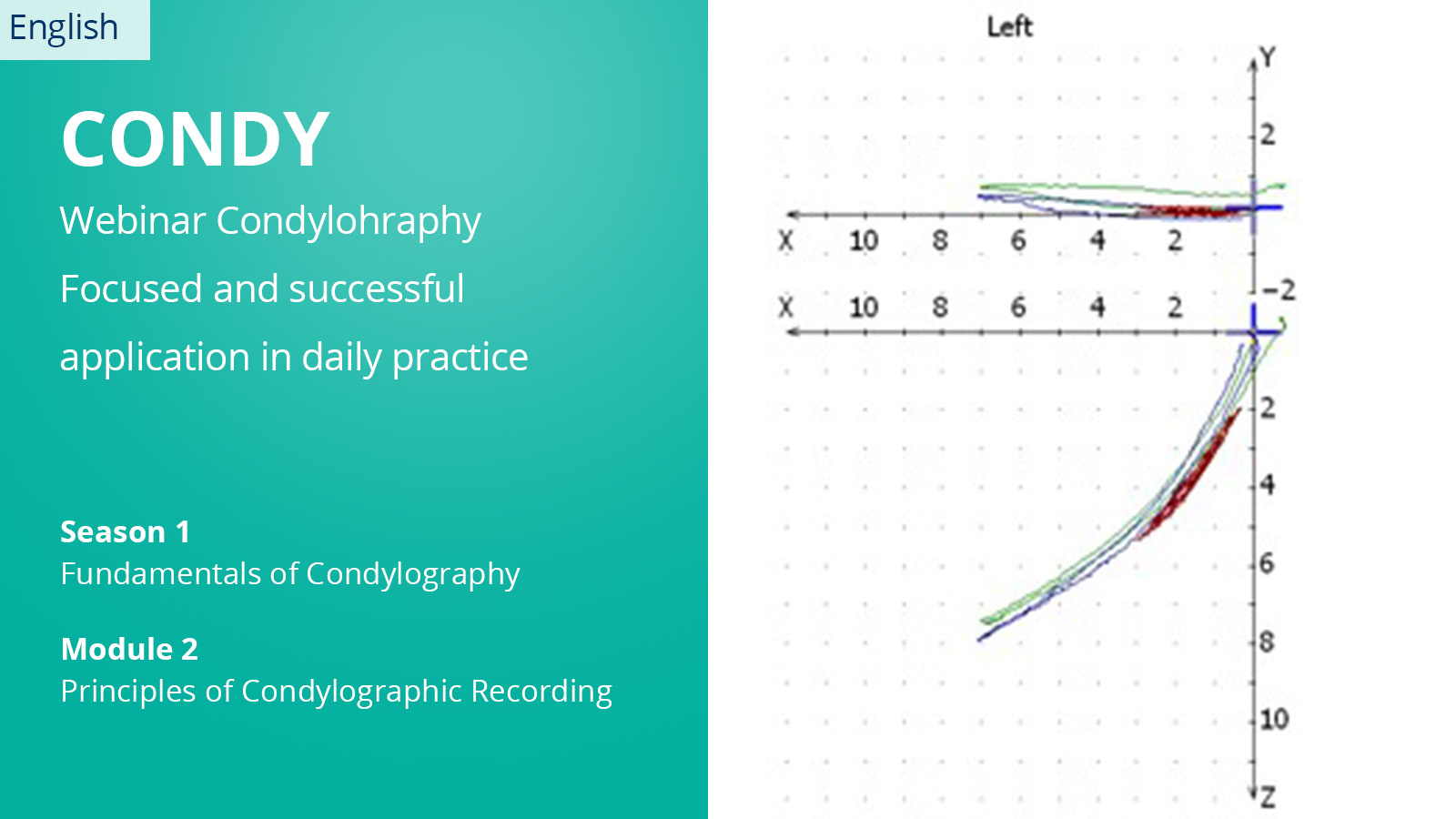
In this module, you will learn which coordinate system condylography is based on, which axes exist in space and how occlusal structures can be examined in this coordinate system with condylographic paths.
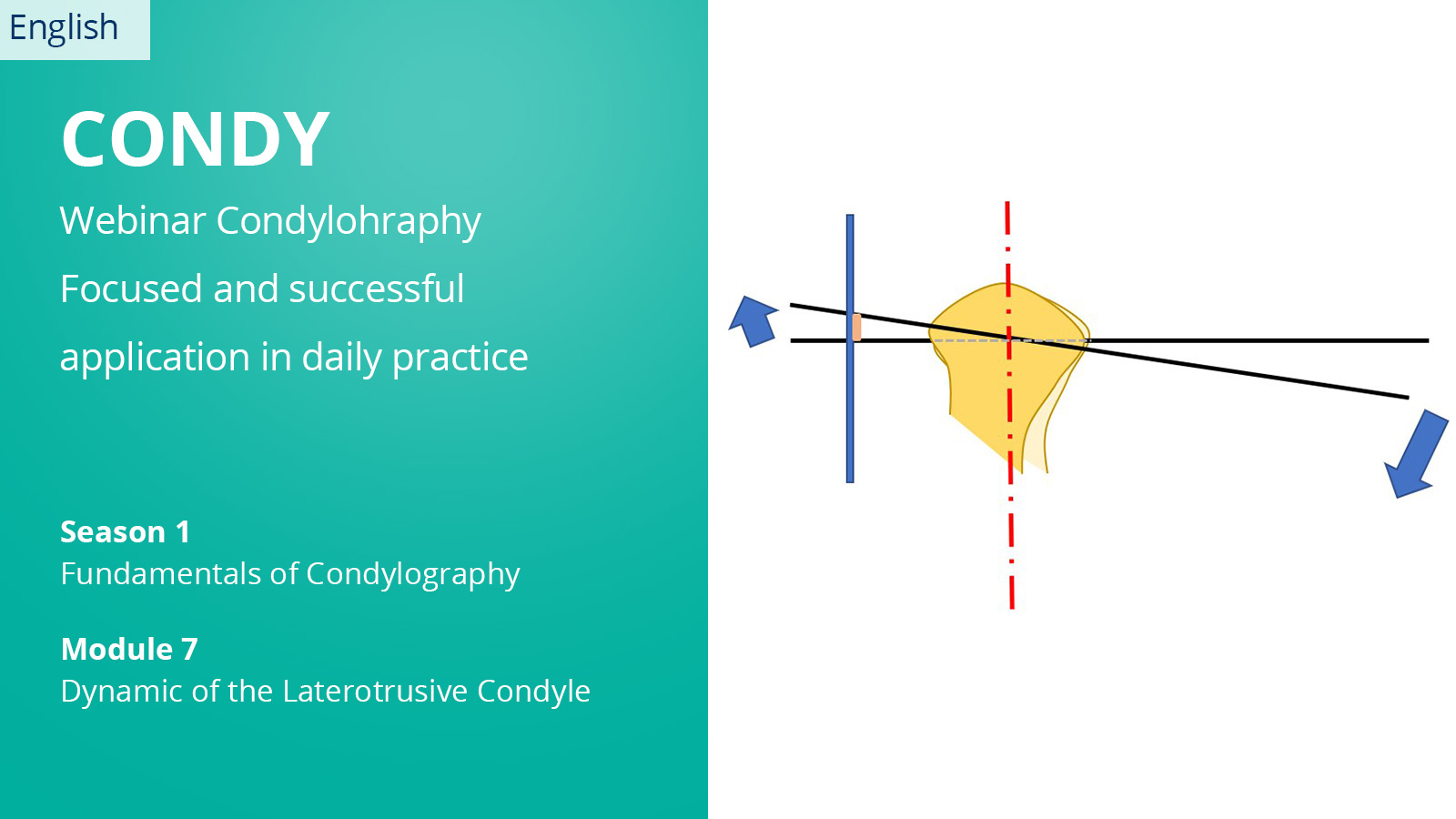
In this module, we will go into the pathophysiology of the temporomandibular joints with displaced articular disc, discuss the dynamics of dislocation and realignment of the articular disc on the condyle, and use a case study to explain the therapeutic options for anterior disc displacement with reduction.
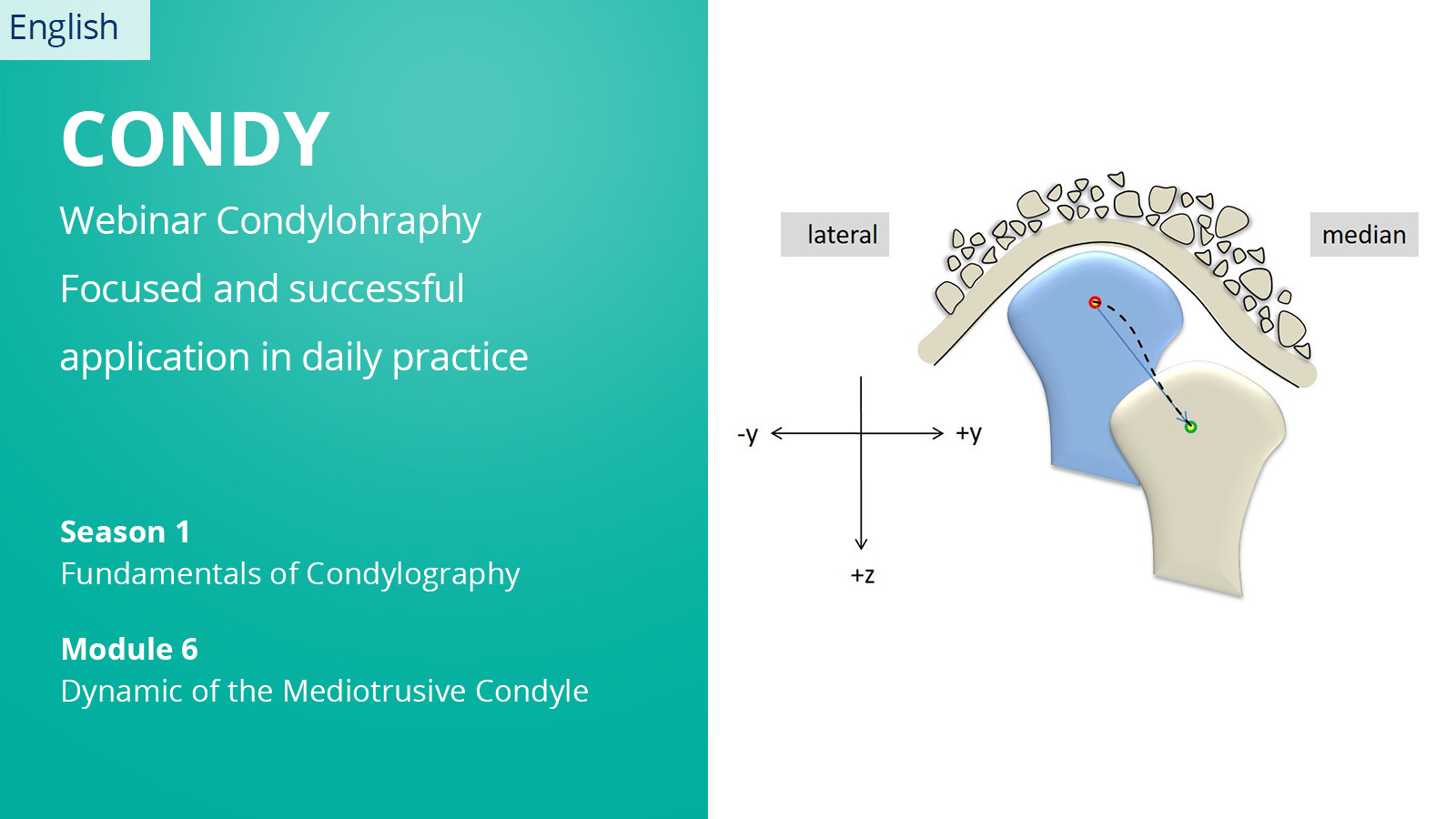
In this module, you will learn what reciprocal clicking is all about, the consequences of such an internal derangement of the temporomandibular joint and how the decision-making process regarding the exact splint position works on the basis of condylography.
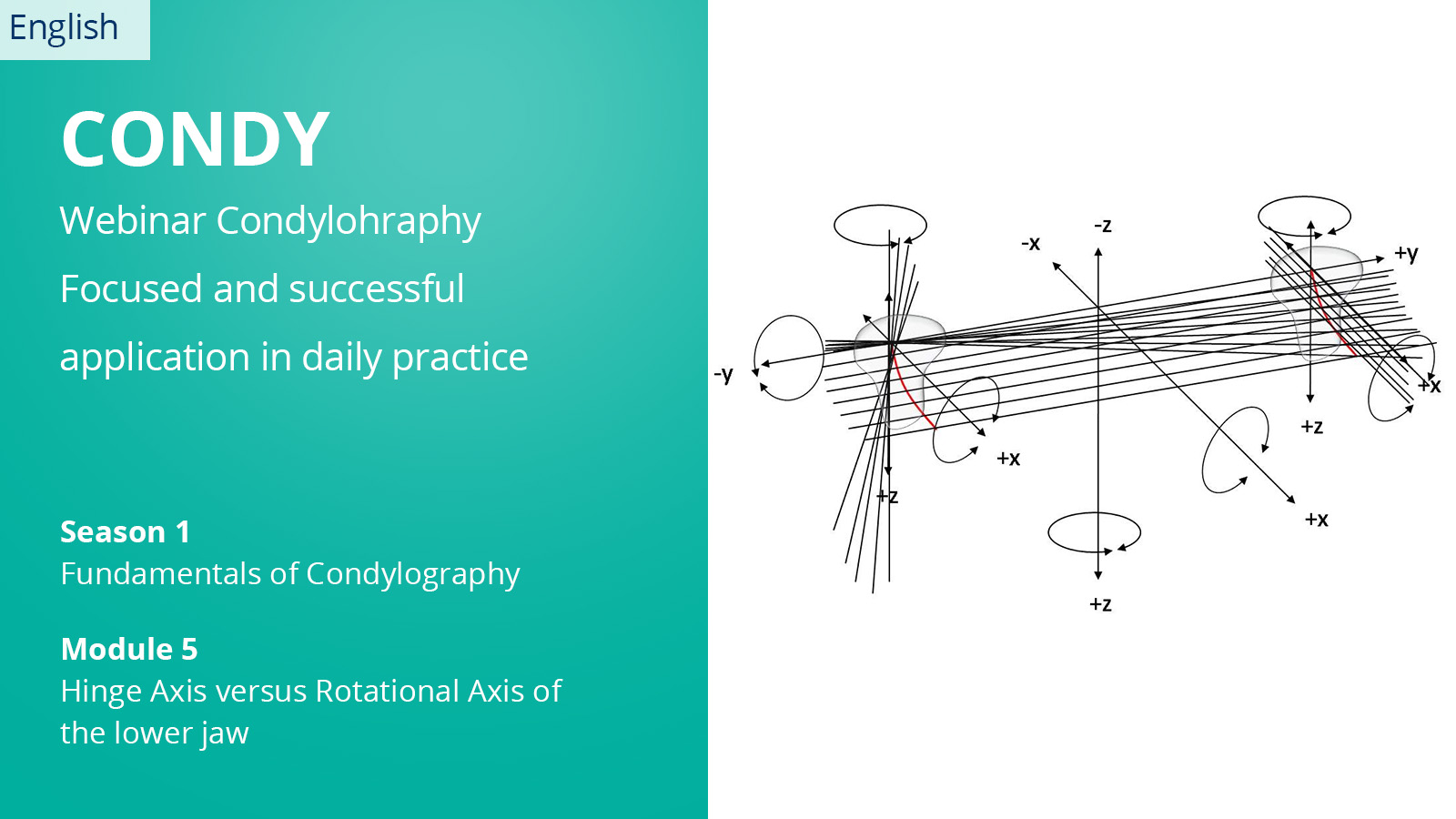
In this module we will show you the importance of the hinge axis of the lower jaw, how this differs from the rotation axis of the mandible and how the hinge axis can be determined.
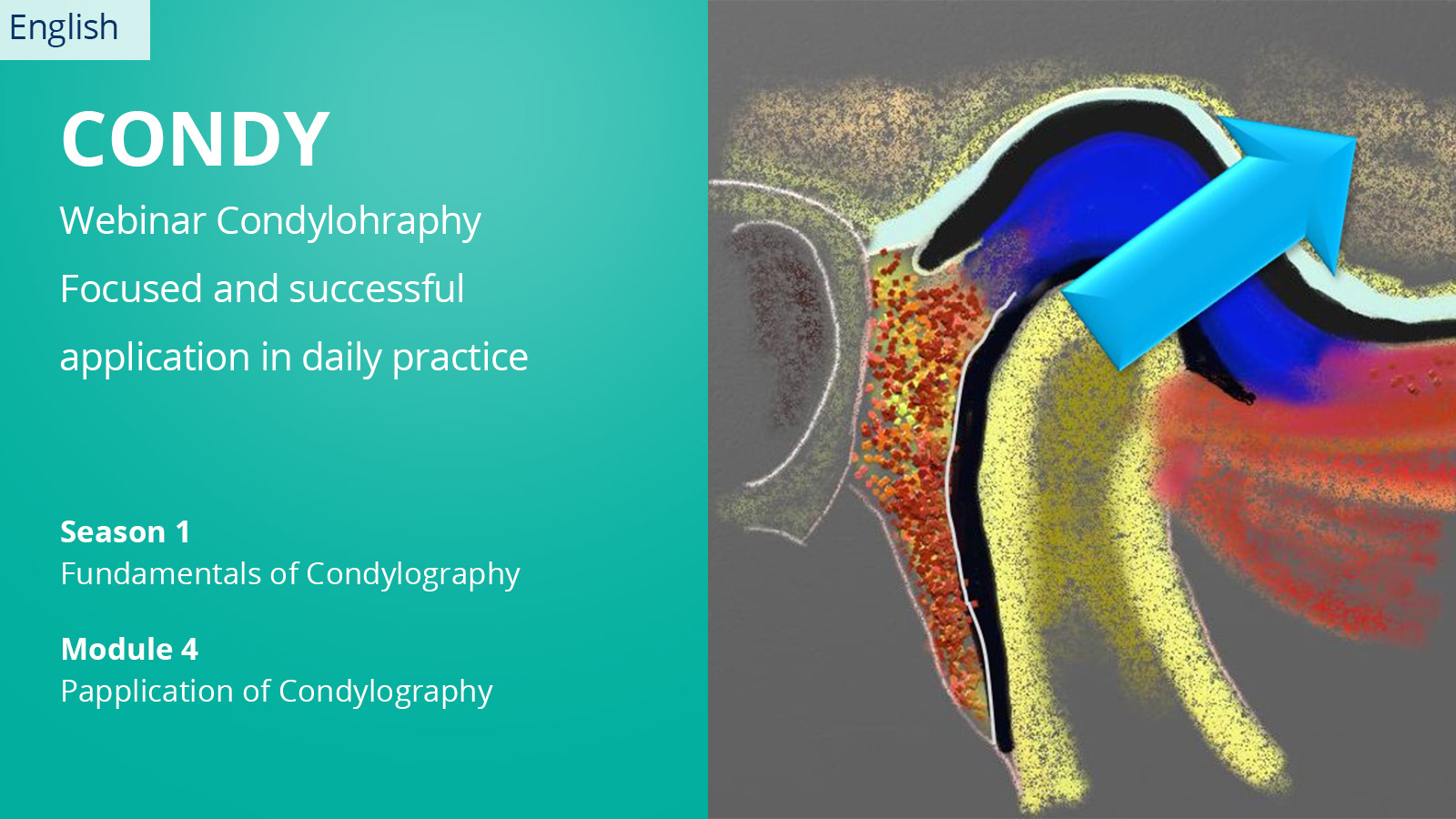
In this module we examine the functional anatomy of the cranio-mandibular system (CMS), present the clinical diagnosis of the temporomandibular joints including the final feeling of the temporomandibular joints.
In this module, we give an overview of different mandibular movements, including the influencing variables and modulators, and present the exact definitions and the correct wording for condylographic paths.