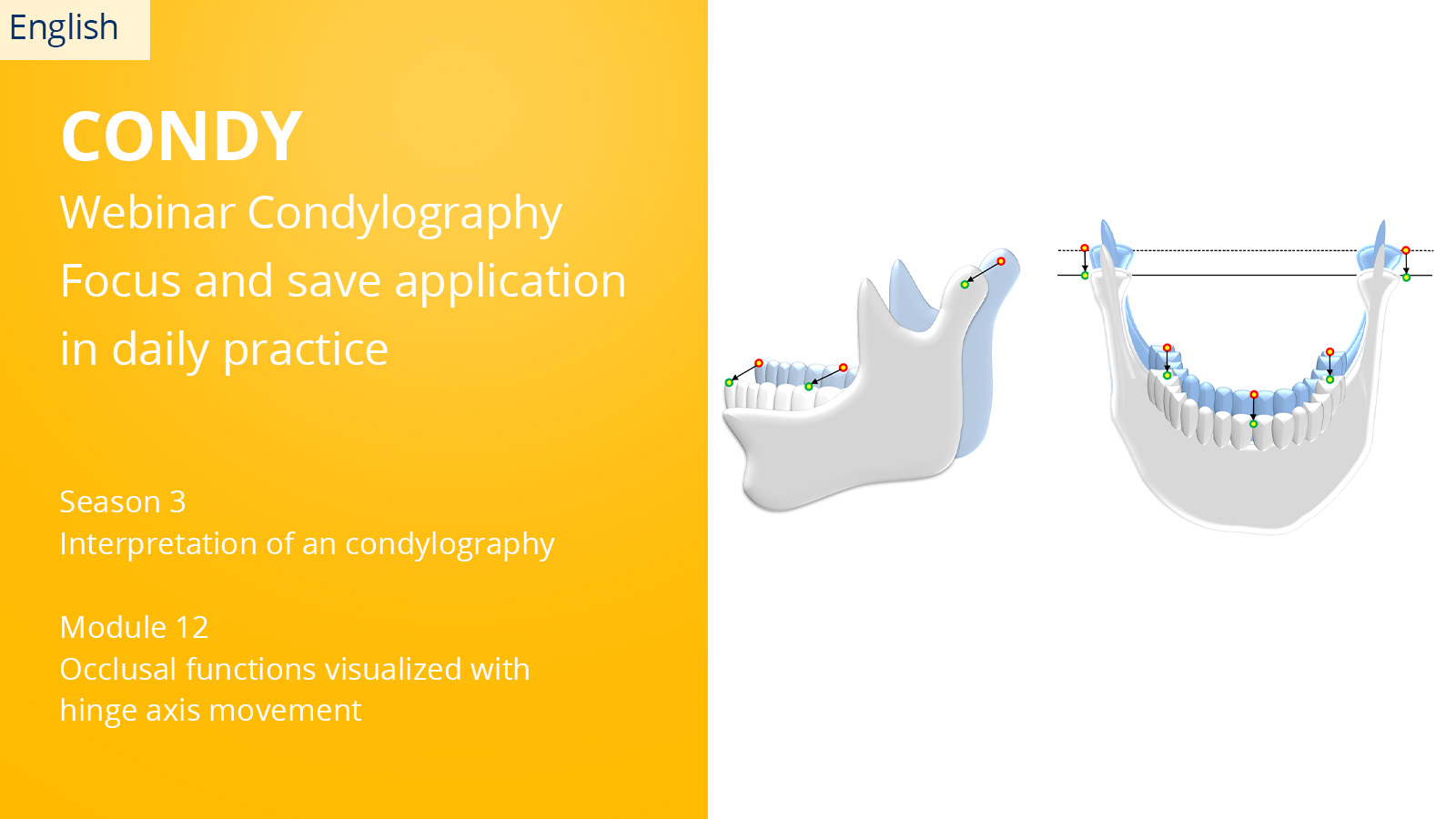
In addition to static tasks, occlusion is primarily used for so-called occlusions – chewing, bruxing and speaking. The detection of these functional movements with condylography supports the interpretation of the mandibular movements, which cannot be detected in this form with any other technique.
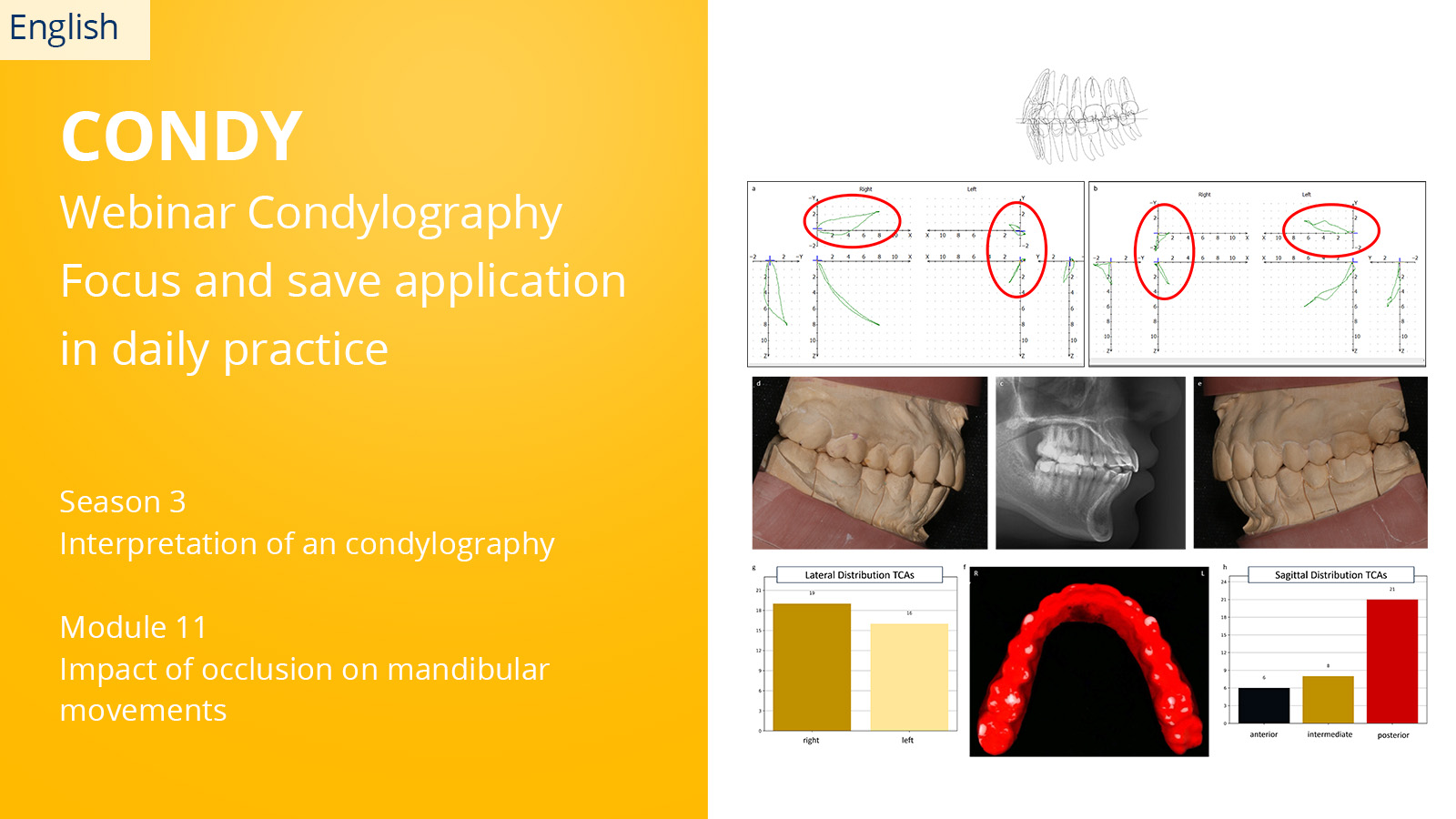
The influence of occlusion on the stomatognathic system is controversially discussed. The causality of occlusion in relation to CMD/TMD is often questioned. Wrongfully so, as explained in this module. The signals in the condylography allow a clear identification of the occlusal problem. The interpretation makes it possible to establish the individual causal connection – and thus initiate a causal therapy.
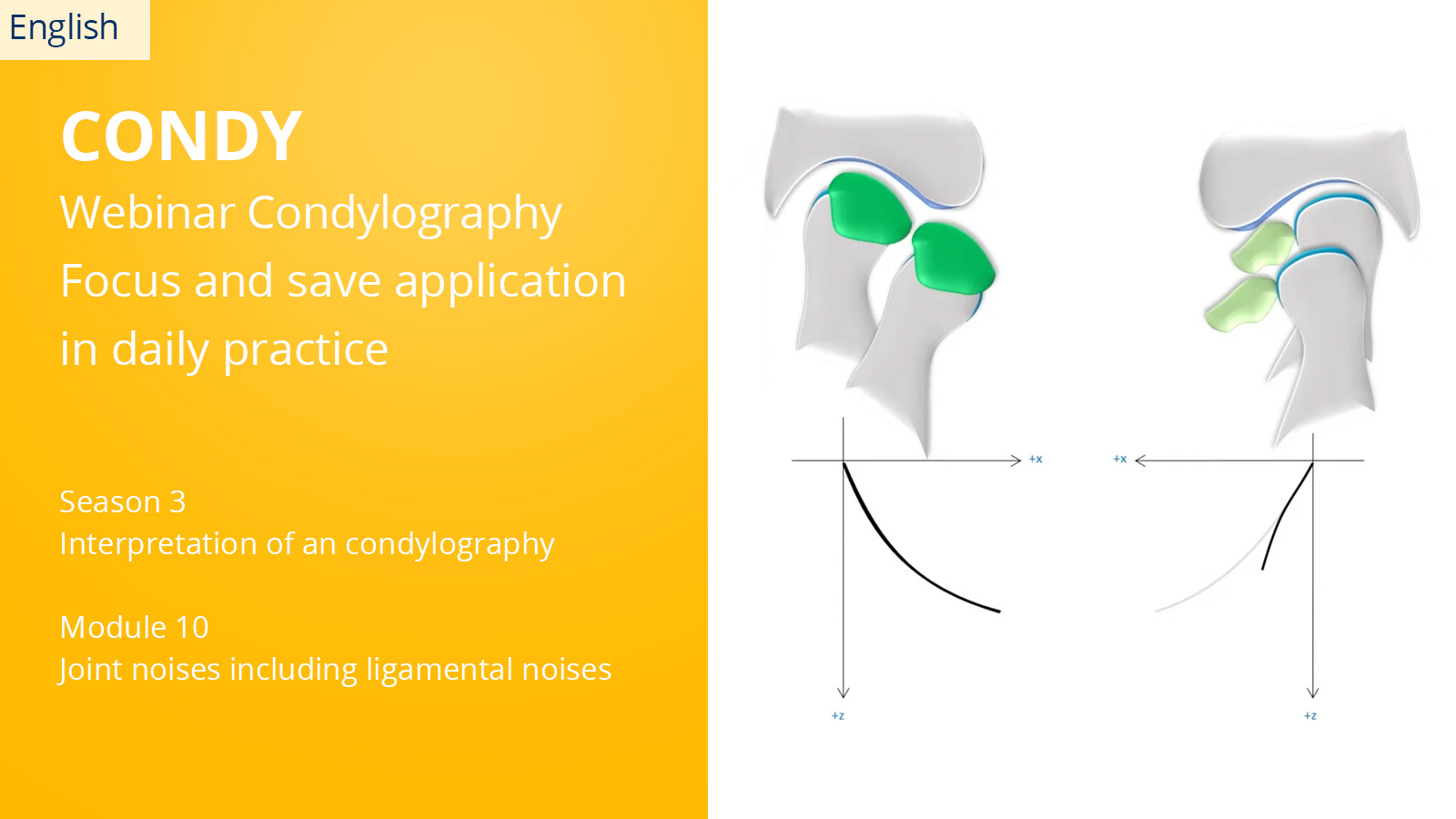
In this module we discuss signals in condylography that can be associated with joint noises. The anterior complete disc displacement is not the only reason. The ligamentous joint noise is also explained and discussed in the differential diagnosis. the interpretation of condylography can be brought into line with the Consortium Network and Orofacial Pain Special Interest Group.
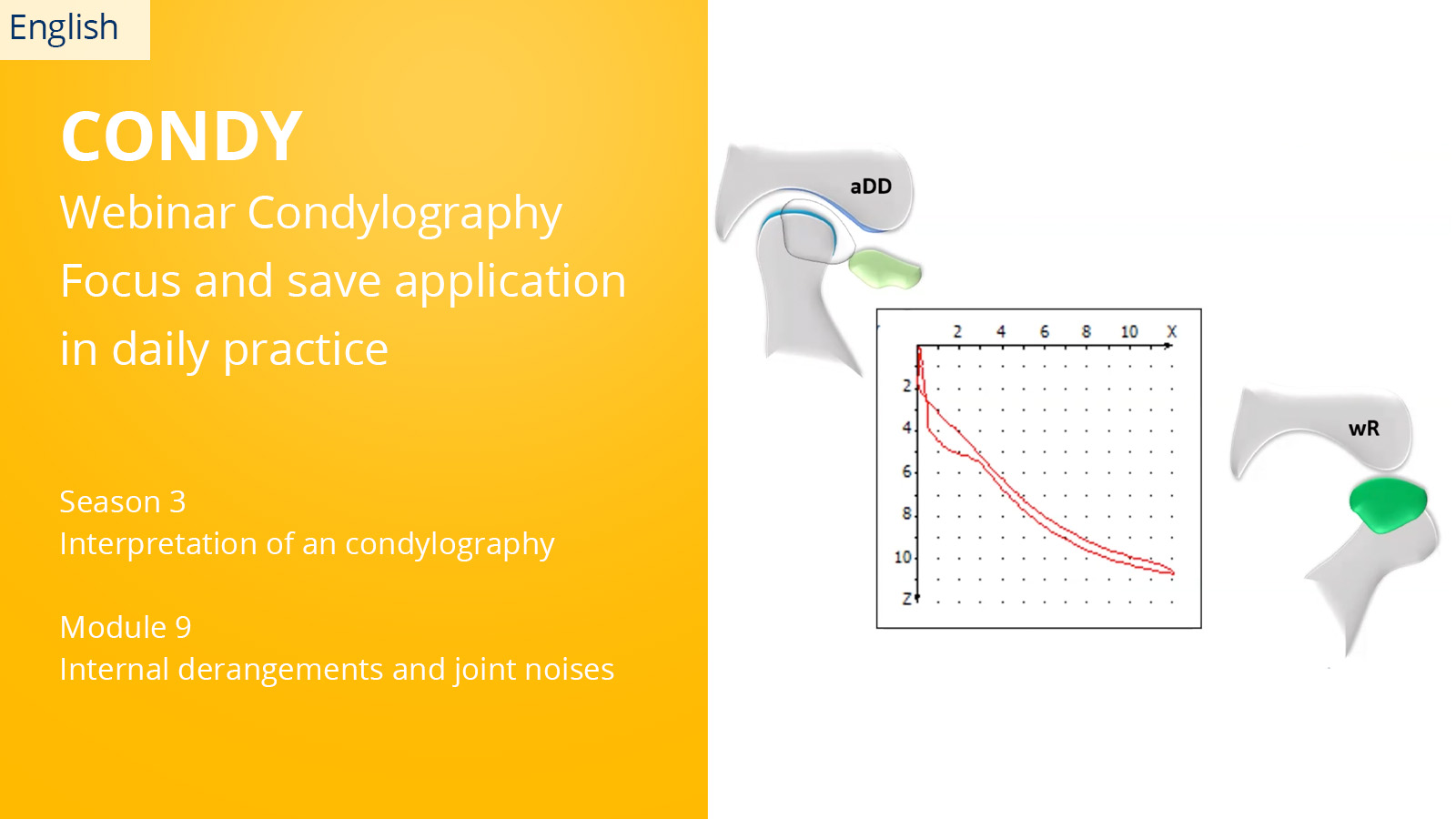
Common symptoms that lead patients to a specialized dentist are joint noises – including the so-called reciprocal cracking. In MRI, the position of the disc relative to the condyle is performed with the mouth closed and open. In condylography, the dynamics of disc displacements (reduction, dislocation) can be interpreted so that the therapeutic position can be determined.
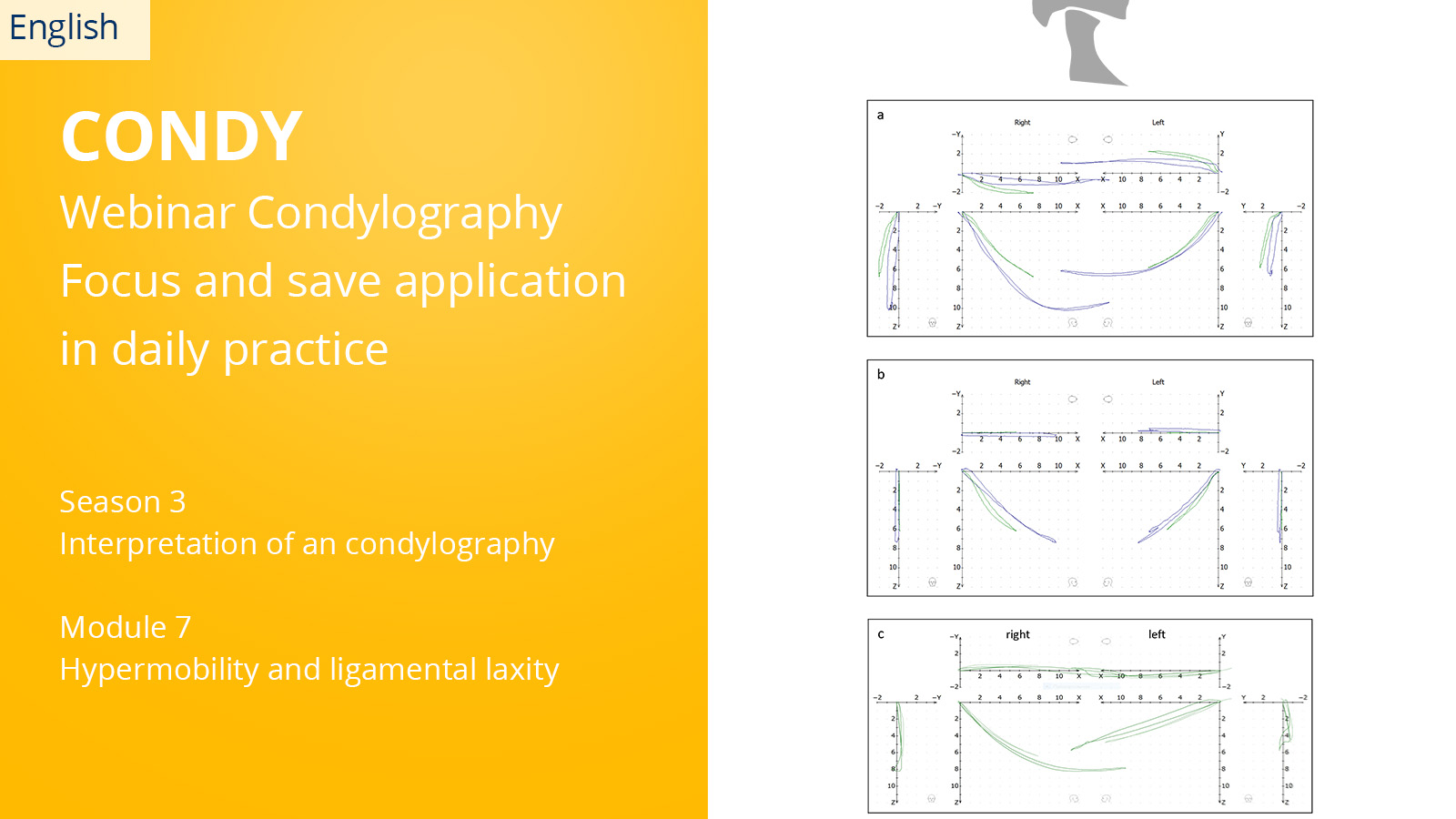
In this module we address an often neglected part of the so-called masticatory organ: the ligaments. The role of the ligaments for the stability of the articular disc in relation to the condyle – both statically and dynamically – is discussed. A brief outline of the pathophysiology of the ligaments supports the understanding of the interpretation of condylography with ligamentous involvement.
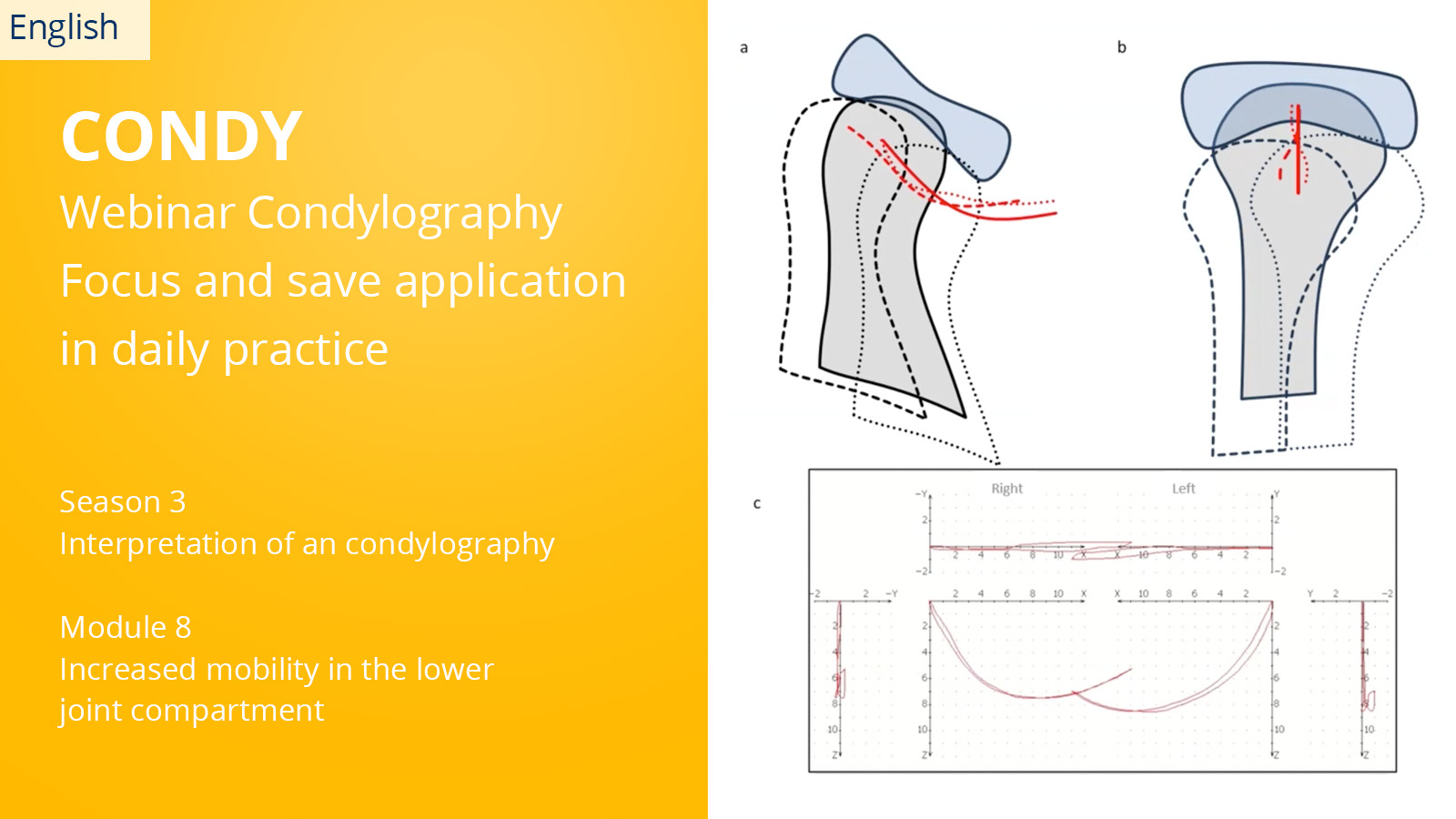
The lower joint space of the jaw joints is often given little attention. The initial signs of disc displacement can be seen there and can be shown on condylography. This makes the interpretation – increased mobility in the lower joint space – possible.
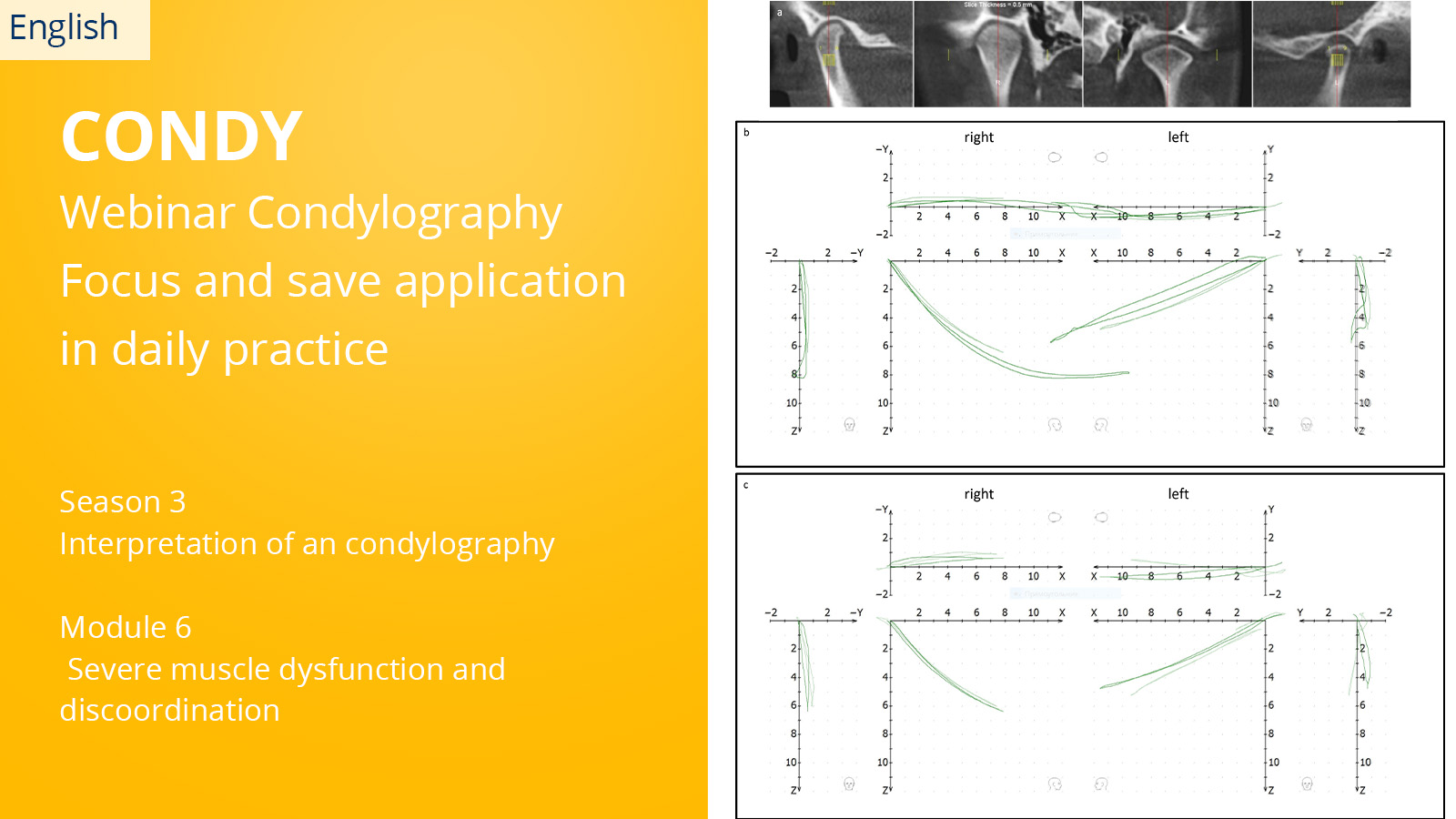
The interpretation of the condylography in relation to an involvement or disturbance of the neuromuscular system must take into account different signals in the movement pathways. The systematic description leads specifically and reliably to correct decisions that enable the condylographic interpretation – the neuromuscular system of the masticatory organ is affected.
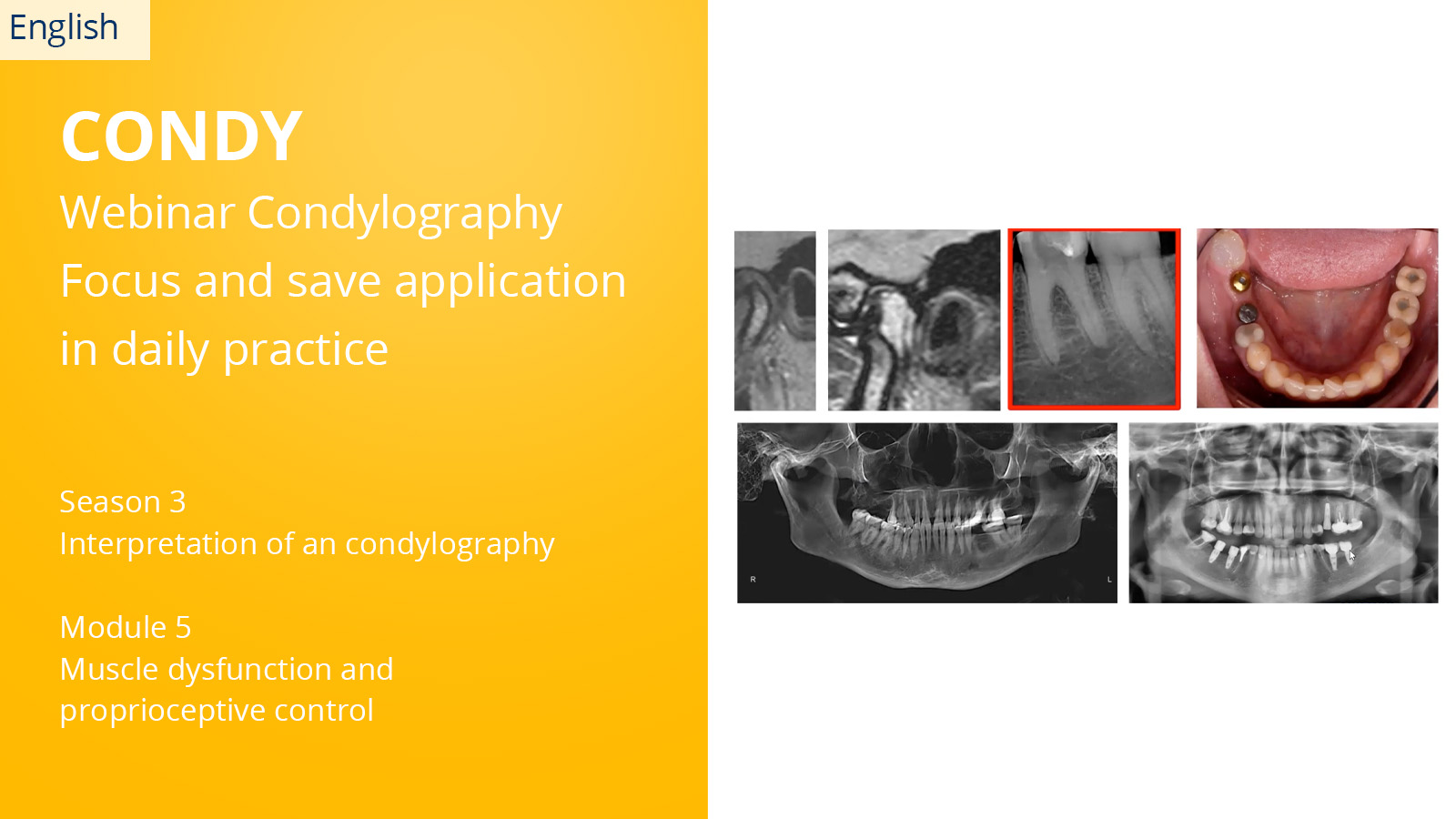
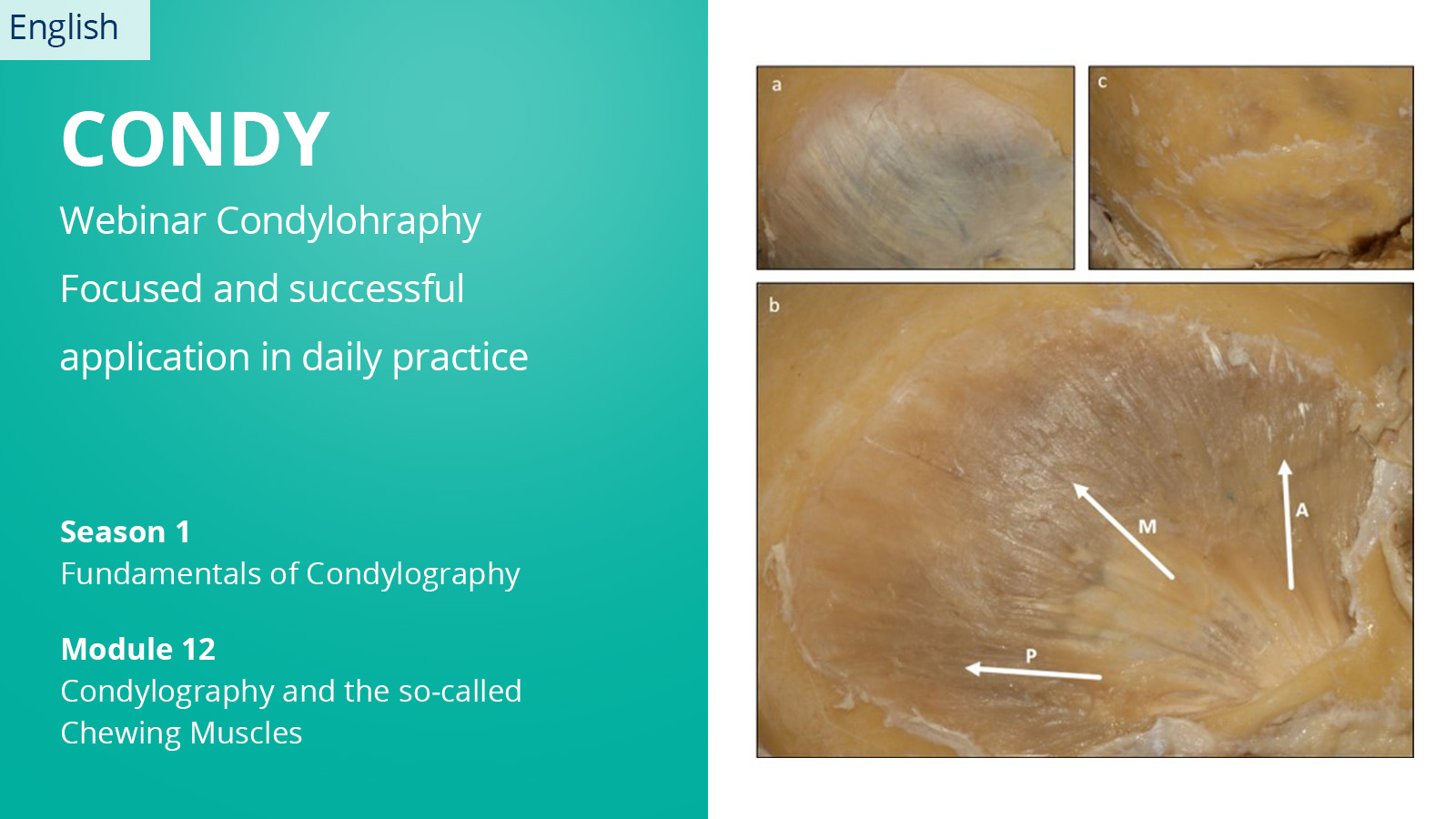
The muscular system of the masticatory organ must be precisely controlled in order to perform the various tasks safely, precisely and efficiently. Proprioception plays a key role in this. Disruptions to these control mechanisms have a significant impact on mandibular movements, occlusal functions and the statics of the lower jaw. In this model, we present the connection between proprioceptive disorders and condylographic interpretation.
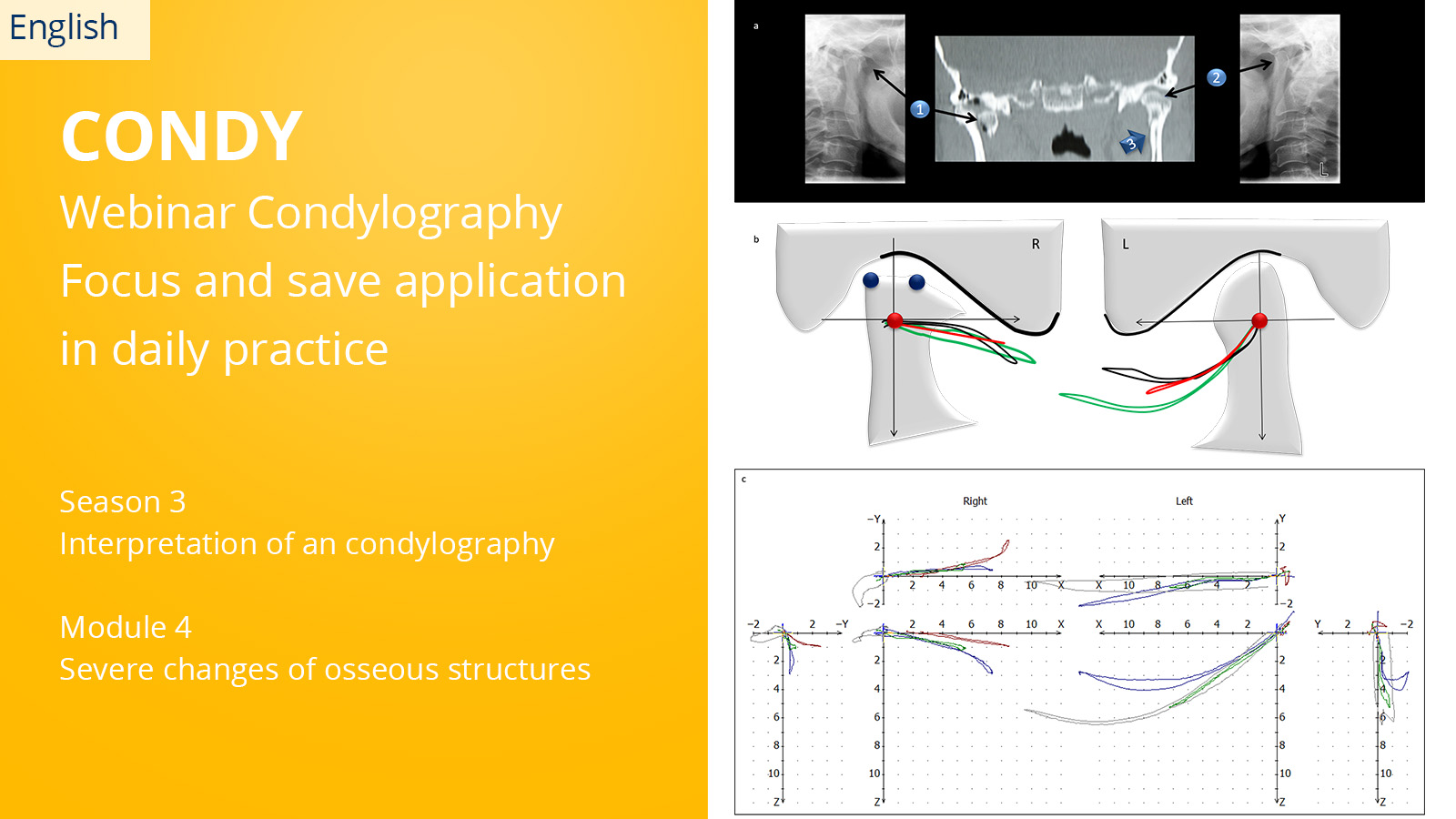
In this MOdule we show the effects of severe forms of temporomandibular joint osteoarthritis on mandibular dynamics. The systematic description of condylography allows the condylographic signals to be quickly and clearly assigned to the morphological changes without overlooking other, less obvious but equally important signals.
This module explores the importance of the axis-orbital plane and provides a historical overview of gnathology. Learn the difference between the principles of pantography and axis mapping.
